Search This Blog

Saturday, November 26, 2022

When you had the turkey dinner five days earlier....


Stock in the making

Get up at 5 a.m. Peel and clean shrimp. Add shells and tails to chicken stock with garlic cloves, bay leaf, and a few slices of onion to boil for stock.


Roux


The roux is critical. If the recipe you're looking at says to heat oil first and then stir in flour, don't believe it. Brown the flour first in a dry skillet, or forget the whole thing.


Beautiful stock!


Now go walk the dog while your stock cools and then come back and clean your house. 


Holy Trinity

The Holy Trinity of Cajun cooking is onion, bell pepper, and celery. Sauté in butter. Add sausage and cook some more. 


Add tomatoes, bay leaves, thyme, and oregano. Hot peppers or sauce if you have the nerve. Now slow down and set the table, but do not open the wine before your guests arrive!

Before


Before company come knocking at the door, add the stock and roux to Trinity, sausage, tomatoes and herbs. Adjust for consistency with additional chicken broth if necessary.


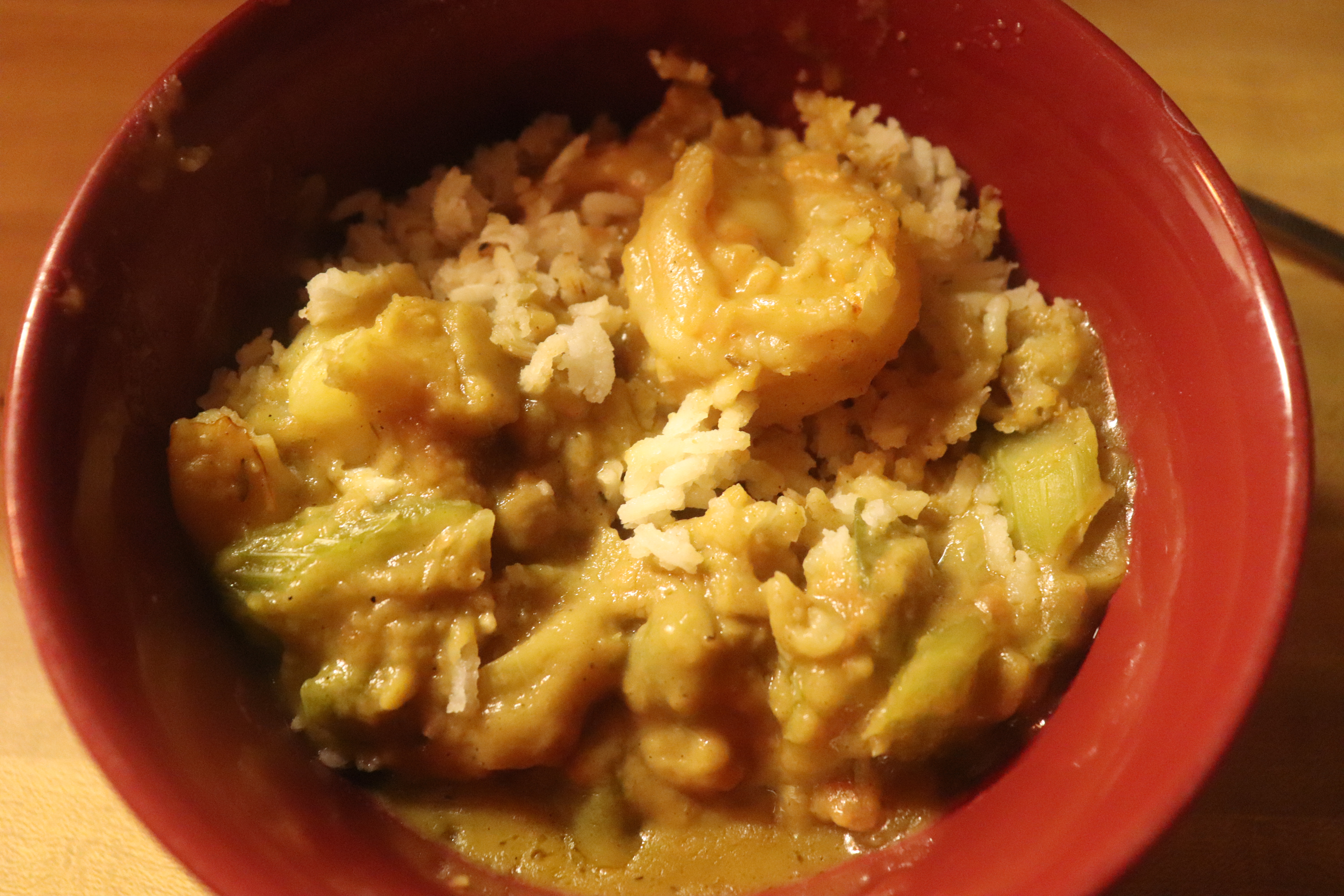
Now it's all together except for the shrimp. and those don't need long to cook, so wait until everyone has had a glass of wine. Finally, when the time is right, add shrimp and cook until opaque. Serve. Then forget to reach for your camera and neglect to photograph the bowls of rice and shrimp-and-sausage gumbo, because it's time to eat, after you take a moment to give thanks for food and friends.


After

When everyone has left, realize that your photo-essay is incomplete. Let it go. No one cares.


Leftovers


Photograph a bowl of leftovers the next day if the spirit moves you, remembering that -- really, no one cares. Give thanks again for friends who shared your table.


It's okay to depart from menu traditions. The important traditions are being together and being thankful.


Monday, August 1, 2022

NOT "Crackers over the Sink"

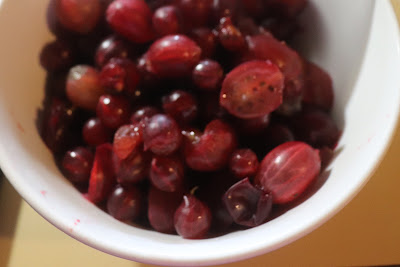
Inspired by red gooseberries


One of my friends had her 85th birthday recently, and I decided to make a special birthday dinner for the two of us. We enjoy meals on my front porch together, often remembering when there were four of us, not just two. (We share a lot of memories.) So why not an extra-special evening? And there were those gooseberries, after all, calling for something out of the ordinary.


So I put together a dinner plan starting with dessert, the most ambitious item on my menu:  gooseberry tart. Gooseberries have to be “topped and tailed” (stem and blossom ends removed), which is time-consuming but also a basically meditative task perfect for a summer afternoon. Instead of adding sugar to the berries, I mixed in about a third of a little jar of plum jam.


For the shell, I looked at half a dozen recipes and cobbled mine together from bits and pieces of all of them. I didn’t have almonds to grind for the pastry (that would be nice another time) but did have powdered sugar. And we might as well say here that this pastry is known as pâte sucrée. Chunks of butter worked with fingers into flour, sugar, and a pinch of salt, and I added a whole egg (though some people use only the yolk or no egg at all). While the sweet dough rested in the refrigerator, I worked outside in the yard for an hour, planting what will be a lovely daylily border, I’m sure, when the plants fill in. 
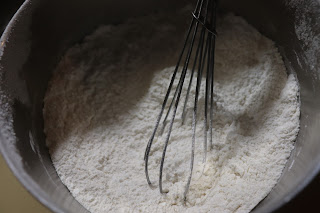


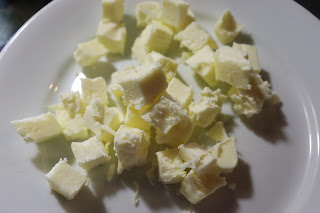
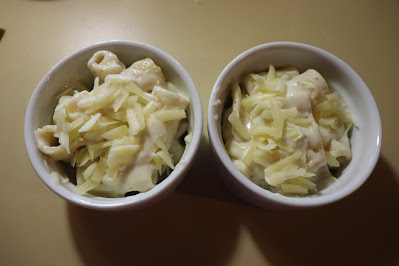
Later, while prebaking the tart shell I cooked a batch of rigatoni, and you could call what I made with it mac ‘n’ cheese, I suppose, at least a variation thereon: basic bechamel sauce but made with cream rather than milk and fresh nutmeg grated in; then, for the cheese, raclette. We are very fortunate to have fine raclette made right here on the peninsula at Leelanau Cheese, and I’d bought that at the farmers market on Friday, too. My cheesy pasta I baked in cute little ramekins, with extra raclette on top, but the cuteness was nothing compared to the taste. I warned my friend, “One bite, and you’ll feel a need to go to confession!” She laughed but agreed after she tasted.
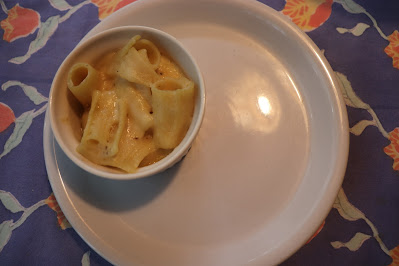

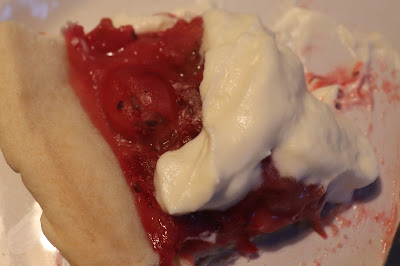
We had the salad I invented a couple weeks ago and love for its cool, freshing summer tastes and textures: tomato (this one an heirloom variety from the farmers market), cucumber, blueberries, and pinenuts, with balsamic vinaigrette. We had poached (steamed, really) salmon and green beans with curried mayonnaise, with the rigatoni-raclette on the side. And for dessert we had gooseberry tart generously heaped with freshly whipped real cream.
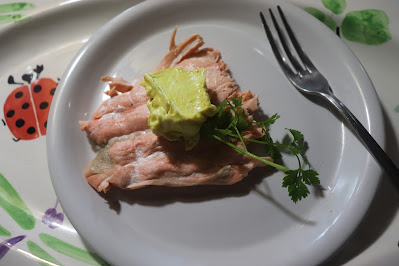


(Cold, the next day)


Half-eaten serving!


Another friend told me the other day that someone had asked her, after her husband died, if she was fixing regular meals for herself or “eating crackers over the sink.” I certainly don’t fix meals like this when I’m alone (or even for company more than once a year, if that!), but once in a blue moon, for an old friend, it felt like the right time to pull out all the stops -- which meant I also did better than crackers over the sink the following day, when my next evening's dinner recapitulated everything but the whipped cream and so, finally, I got a few half-decent photos to illustrate this post. Because while I often photograph while I'm in the process of cooking and baking, I also often forget to photograph the finished dishes in all their glory. "Did you take a picture of that?" the Artist used to ask me. But now no one asks.


Friday, February 4, 2022

So Good, It Doesn't Need Meat


Getting Started

Curried cabbage soup, made with coconut milk, sounded good to me when the thermometer went down below freezing. As is true of so many wonderful winter dishes, the soup begins (on the left above) with onions, garlic, and fresh ginger. In a saucepan, sliced carrots simmered in chicken broth (I use Better Than Bouillon; see this post on cauliflower soup) until it was time to add a can of diced tomatoes and let those flavors simmer together. 


All together now!


Aromatics added to the broth-carrot-tomato mixture in the saucepan, it was time for spices -- curry and turmeric. More simmering.... Stir in the coconut milk. And then, at last --.


Chopped cabbage will steam and simmer, blending into the base.

With the addition of cabbage, our soup is complete. How long you simmer it depends on how soft you like your cabbage and how hungry you are. 


Some recipes for curried cabbage soup call for chicken, but frankly, I don't see the point. This is such a flavorful soup that chicken would get lost in the crowd. And you can always ladle cooked-down, leftover soup over rice and serve it next to chicken, if you like, the next day.

Perfect soup!


Monday, December 27, 2021

Save Those Cookies!


Hard to believe I haven't posted anything here since April. Okay, maybe not so hard to believe. There were last weeks in the ghost town, travel back to Michigan, months of bookselling and mowing grass, then packing up to come back to the high desert. I haven't been filled with ambition since we got here, either, not for cooking or baking or much of anything but reading and walking with dogs.


I did, however, get it together to mix up a couple batches of cookies before Christmas and want to share a tip that others might find helpful. The first batch of mincemeat cookies I pulled from the oven were not, as it turned out, quite done. I went ahead with the rest, then turned the oven off, and put the not-quite-done cookies back on a cookie pan and in the oven. Remaining heat took care of the problem. In fact (and this might be going further than necessary), I didn't pull them out of the oven until the next morning, when they were crispy and delicious and not at all overdone. 

Mincemeat cookies have a yummy taste but are an easy drop cookie to make and don't need decorating to be festive. Sorry I did not take enough photos to document the problem and solution, but as you can see by the nearly empty bowl, everything worked out fine. This solution just might work with any kind of drop cookie. Let me know if you run into the problem with another kind of cookie and solve it with my fix.


Sunday, April 18, 2021

Try It, You’ll Like It: My Nontraditional Madeleines


Only a small amount of chocolate needed

Friends were dubious. Their first response was that substituting orange zest for lemon sounded fine, but they drew back in horror at the idea of chocolate. Nevertheless, she (I) persisted. What is cooking and baking without experiment or risk? This is, after all, a pretty small risk in the larger scheme of life. 


So here are the ingredients and amounts I used, which you would be wise to double, since I had cut the original traditional recipe in half before trying it the first time and just stuck with that for my variation. See previous post (here) for details of original attempt at madeleines. 


1 cup sifted flour 

½ cup fine sugar

salt

½ cup melted butter

2 eggs

½ tsp. vanilla

zest of one large orange

½ oz. baking chocolate


The small amount of chocolate doesn’t even have to be heated on the stove. When the butter is melted, just pull that little saucepan off the fire, add the chocolate, and stir. It will melt quickly.


You may be tempted to increase the amount of chocolate. Don’t. At least, that is, well, do what you want, but I recommend the small amount given here. You don’t want chocolate to overpower the orange flavor, nor do you really want a “chocolate cookie” result. Do you?


Sorry there is no photograph here of the results. I was making the chocolate-orange madeleines for a neighbor as a get-well gift and only kept four for us, which we ate immediately after dinner and before I could even think about grabbing my camera. We loved them. What more need I say? 

Sunday, April 11, 2021

Sorry You Can't Eat Pictures!


Hot weather brings salads to the table.

Greens are growing to harvest size.


Love the earth tones in this mix of spices for pork loin dry rub!


Light, crispy after-dinner treats when it's too hot to bake cookies.

Tuesday, April 6, 2021

Madeleines: Who Says They’re “Tricky”?

The pan, or mold, is essential.


The essential baking pan with its shell-shaped creusees traveled with me from Michigan to Arizona in November, so there was no reason my first attempt had to wait until April. Was I intimidated because by the reputation of these iconic French dainties, famous not only for their origin but legendary for the literary role played by a madeleine dipped in tea by the narrator of Proust’s Remembrance of Things Past, the taste of which brings back a rushing flood of childhood memories?


Not exactly a cookie, and not anything I would call a pastry, either, the darling little tea cake’s richness is belied by the simplicity of the ingredients. At least one online recipe source, however, referred to the making of madeleines as “tricky.” Luckily, I was spared that added anxiety, as I did not look online at recipes until after having done the deed – and only then to provide a link on Facebook for friends unfamiliar with the madeleine. My own preparatory research was faster and more direct: Prosper Montagne’s Larousse Gastronomique: The Encyclopedia of Food, Wine and Cookery


More than a cookbook, Larousse Gastronomique provides history of various foods and food-related items, all arranged in alphabetical order. Was the inventor of the madeleine Prince Tallyrand’s pastry-cook, or were they known earlier, first made in the town of Commercy? Certain it is that Commercy long guarded its “secret recipe” for madeleines, the specialty that put the town on the map of France, and Montagne gives two recipes, that for a madeleine de Commercy and another for a madeleine ordinaire. You might say I used both, because what I did was to cut in half the proportions given for the ordinary madeleine and add the lemon zest from the Commercy version.


Recipe:


And so, to ½ cup of sugar, 1 cup of sifted flour, a pinch of salt, two eggs, and ½ teaspoon of vanilla (amount not specified, but that’s what I used) I added ½ cup melted butter and the zest of one lemon. (Use your own judgment, but I let the butter cool slightly rather than pour it directly into the flour and egg mixture as soon as it was melted, not wanting to have a bowl of floury scrambled eggs on my hands.) Tip: If you find yourself in someone else’s kitchen and don’t have a flour sifter, spoon the flour into a fine-mesh strainer and jiggle it through by hand. It works just fine.


substitute sifter

smooth batter

before...


The resulting smooth batter is then spooned into buttered and floured molds and popped into the oven at 375 degrees for 15-20 minutes. I let them cool before popping them out of the pan. Perfect!


Variations:


Powdered sugar can be sieved over the warm tea cakes before serving, but I chose not to gild the lilies this time around. I may do so another time. And here’s a possibility from the baker who warned of potential failure: Carefully bring the butter past simply melted all the way to browned, and your finished tea cakes will be darker in color and perhaps with a somewhat nutty flavor. Try it and let me know. You do have to watch the butter every second to ensure it does not go past browned to burnt.


Actually, what I have in mind to try sometime is orange instead of lemon zest and a small amount of dark chocolate (!) melted with the butter. Does that sound like heresy? What would Proust say? It would certainly not be a classic madeleine, but something tells me it might be delicious. The "ordinary" ones certainly are. 


P.S. We all have our "madeleine moments." Here's one I wrote about on an earlier occasion.


P.P.S. Here is the subsequent chocolate story.