Search This Blog

Showing posts with label winter. Show all posts

Friday, March 10, 2017

Eat Hearty When Winter Roars Back


One side done!

When balmy, 50-degree weather gives way to fierce winds, blowing snow, and a bare sixteen (yes, 16) degrees above zero, it’s time for the Paris kitchen to serve up a hearty, Midwestern American breakfast. Not just any old pancakes, either, but stick-to-your-rib griddle cakes.

They start with cornmeal, and cornmeal for me is corn grits from Bob’s Red Mill, an employee-owned company (since Bob's 81st birthday) producing some of the best food products in the United States. You can order directly from them online, but I don’t. Their products are carried at Tom’s Market in Northport, the Leland Mercantile, and of course at Oryana Co-op in Traverse City. Buying local preserves local jobs and keeps money circulating in local communities. This goes for food, books, and anything else that is available where you live.

The best! And so versatile!
My corn griddle cakes started with a cup of boiling water poured over a cup of corn grits, and while that was calming down (the recipe said to let it sit 10 minutes), I sifted flour (1/2 cup) and baking powder (2 tsp.) in one bowl and mixed milk (1/2 cup), an egg, and 2 tbsp. sugar in another. That is, I'm pretty sure about those proportions, but you might want to check your cookbook, because I didn't bring mine to work with me today.

About that sifting business. I learned to sift flour in my mother's kitchen, and the lesson was reinforced in junior high home economics, but then for decades I pooh-poohed sifting. And got by fine without it. Now, however, I have a little sifter and take pleasure in using it. Little things can give a lot of pleasure in a little kitchen. Besides, even a hearty corn griddle cake should be as light as it can possibly be.

I preheated my old griddle well, not wanting to sacrifice the first cake to the dog, despite her pretty, pleading face. (She always gets the last little bite on my plate.) Having the griddle hot is important for good griddle cakes, as is not overmixing. Mix just enough and no more.

Perfection! So elusive!

Leelanau syrup! Last spring's!
When they come off the griddle, slather on more (organic) butter and some good local maple syrup. If you make the cakes large, as I did this morning, one will be enough for breakfast, but the rest can go in your lunch box. You’ll need them on a day like today!


It is not spring yet this year in Leelanau County.

Tuesday, February 14, 2017

Household Apple Harvest


Apple trees. Pie apples. Apple blossoms, apple pie, an apple for the teacher. Iconic fruit of temperate climates, the apple was my childhood icon, as well.

When I was growing up, we had a pear tree, a raspberry patch, and three apple trees, the largest of them our backyard shade tree and my personal fantasy world, a world whose nature changed with the seasons and my daily moods and fancies. Sometimes it was a tropical island, surrounded by ocean, and my little friends and I had to venture out to sea (“swimming” our arms through the air, which in our play was water) in search of sustenance. Another day the tree might be a rocket ship that Jimmy and I took to the moon or beyond, little green apples stuck on broken twigs (broken for the purpose, mind you) serving as control knobs and levers as we passed beyond the rule of adults in defiance of gravity.

Some of the sweetest times in the apple tree, though, were times I spent alone with a book. Stretched along a high, sturdy branch, hidden in greenery, high above the heads of anyone wondering where I was, I would lose myself in a story, the bare tree better than any treehouse could possibly be. A treehouse would be suspected of harboring a missing child, but a quiet, still child alone in a tree could be happily solitary for hours.

My mother made the backyard tree’s fruit into pies. Another tree downhill in the side yard was harvested for applesauce. As for the third apple tree, it was more notable for blossoms than for usable fruit, and while the side yard trees were climbable, they were too small to serve as solitary getaways.

Then there was the dreaded task in the fall of picking up fallen apples. The yard could not be raked, nor the grass mown, until the apples were picked up, and that job fell, naturally, to the children. Bushel baskets came out of the garage, and we were put to work. My sisters and I had to pick up not only good, sturdy fruit for kitchen and pantry – we didn’t mind that -- but also soft and rotten apples, apples gone to worms, apples stepped on and turned to repulsive brown mush.

Neither of my little home apple trees today would support the weight of much more than a robin, but they do bear fruit, and I also harvested apples from wild trees in the neighborhood, where the fallen brown fruit on the ground is winter food for deer and other wildlife. Last fall’s apples that did not become sauce went into the Paris kitchen farmhouse food dryer, which was, I must say, a great success. I did not dry a quantity sufficient to try making dried apple pie, but we have enjoyed for months now dipping into the big glass jar for a few slices to accompany afternoon tea. Some slices are thicker than others, some pieces rather than rings, but I've found that none of the differences affects the taste or the keeping quality of the fruit. Exactitude is not a requirement, it seems, when the project is drying apples, and I like that. 

In a world of rigorous demands, I like a “forgiving” project, one that tells me I’ve done a good enough job.


Monday, January 9, 2017

Winter Fare: Gophers and Stone Soup

Stones at mouth of Hurricane River


I was just kidding about the gophers. What I mean is waffles.

Warming plate while waffle iron heats

In Paris, France, waffles are street food. Hot gaufres are served up by vendors in parks who sell their food out of little carts, small mobile kitchens. Like ice cream cones, gaufres are favorite treats of small children but enjoyed by adults, also, perhaps especially by visitors from the American Midwest, to whom street food is a novelty. A favorite French waffle topping – there are many, but this was my favorite -- is almond paste, smeared on like peanut butter on crackers, then sprinkled with powdered sugar.

Out of curiosity, I checked in my French cookbook to see if it even contained a recipe for waffles. Would anyone in Paris ever make them at home? Well, there was a recipe, in fact, but in the section on cakes, on the page opposite fruit cake and jelly roll. It calls for fresh yeast rather than baking powder and also, to my surprise, includes rum, an addition that would never have occurred to me.


Last yummy bite!
For Americans at home in our own country, waffles are breakfast food, but they are a sweet treat here, too. The small, square depressions produced by the iron form a dozen or more tiny receptacles for melted butter and syrup. Jam is a delicious variant topping, and then no fork is needed. Dreaming of Paris, one can pick up a waffle section with fingers, confident of capturing every last morsel of confiture de pêches (thank you, Ed!) or, when that’s gone, good old Michigan strawberry-rhubarb jelly.

We are not talking here about an everyday breakfast, of course. Not the beginning of an ordinary workday. It’s holidays and Sundays that call out for the extra sybaritic excitement only waffles can bring to an otherwise cold, bleak winter morning.

Outdoors the temperature rests, stubbornly, well below the freezing mark, and wind blows fresh snow into blinding drifts. A frigid Sunday morning in January! What better day to stay home by the fireside with dog and books and movies?

Beautiful, beantiful beans!

More stones
Meanwhile, in the big cast iron pot that rested overnight on the cold porch is the bean soup that will be the evening’s hearty peasant supper. On Friday night, as I first covered the colorful beans with water to begin soaking, I thought again, as I have so often before, that they are as beautiful as wave-washed stones on the shores of Lake Superior. Stone soup? Why not? Dry beans lose their bright colors when cooked, but the flavors that develop are worth the trade-off.

Slow cooking. David is always encouraging me to use an electric slow cooker for dishes like bean soup or stewed chicken, but I resist. There is something about that ceramic pot and the way its unlifted lid -- one is instructed rather severely not to lift the lid during cooking! – the way, I say, that lid holds in all the dish’s moisture that, to my way of thinking, prevents precisely the rich, concentrated flavors that are my goal. -- Oh, dear, my italics are running away with me, escaping from foreign words and phrases to the equivalent of a raising of the voice! Yes, it’s true, my emotions are involved!

Where was I? Ah, yes, concentrated flavor.... And besides that, I like to lift the lid! I like to stir the contents of the pot! Stirring the pot makes me think of my grandmother at the stove, and I love remembering my grandmother! I even like to leave the lid off for periods of the cooking process as the bean liquor thickens and steam rises and an alluring aroma fills the old farmhouse. These are some of the joys of winter in Michigan: tastes and smells and leisurely activities mingled with memories.

Far from Paris, you see, I carry that city in my heart, along with the U.P. and Ohio and the Illinois prairie and the Arizona cow country and every other place I have ever lived and cooked and eaten, and in my mind’s eye I see again long-vanished scenes and am warmed by thoughts of family and friends and even strangers who shared those bygone days.

What is the point of having a day to spend at home if I am to deny myself the pleasure of stirring the pot?

Well-stirred bean soup


Wednesday, January 4, 2017

One Saucepan, Two Skillets


We spent New Year’s Eve quietly at home, watching a movie we’d seen a few years before, “Temple Grandin,” with Claire Danes in the lead role. It was every bit as wonderful as I remembered, if not more so. Moreover, this time around, in light of our three months in southeast Arizona in early 2015, the ranch and feedlot scenes with horses and cattle were familiar and set me to dreaming of the high desert, and after the movie David and I reminisced about Willcox (which I always call fondly “my little cow town,” to differentiate it from Dos Cabecas, “the ghost town” where we lived), wondering what had transpired with this or that residential or commercial building, fondly recalling coffee on the front porch at Beverly’s, and in my drowsy, go-to-sleep, after-midnight thoughts I “sang” myself a mental map of a lullaby, sketching in my mind the main arteries of Willcox and the roads leading north to Bonita and Safford and southeast to Dos Cabezas and Chiricahua and remembering the scenery along those familiar ways. We even woke to a sunny new day and year with Arizona thoughts still in our heads, finishing each other’s sentences as the listener immediately pictured the speaker’s subject.

So it was late morning on New Year’s Day before I turned my attention to my compact little northern Michigan Paris kitchen. We were going to a party in the neighborhood later in the day, and I planned to take, as I had the year before, a big casserole dish of hoppin’ john. Not a last-minute project but one that needs time to “get good,” as my grandmother used to say.

Full disclosure: Besides a single saucepan and two cast iron skillets, there was a rice cooker involved the night before. I’d decided make rice for our Chinese shrimp and vegetable dinner, with the idea that a big enough pot of rice would give me a head start on the next day’s hoppin’ john. My only problem was having failed to check the household rice supply first. Oops! Not enough for a very generous casserole on Sunday! And so, improvisation had to come to the rescue, as it so often must do, in kitchens of any size. Luckily, I had a goodly supply of the rice-like pasta called orzo and so, deciding that could be mixed with the rice as an extender, my first step of the morning was to set water to boil in a saucepan.

Second step was to dice a big onion; third, cube several slices of good ham; fourth, put first the onion in one iron skillet to sizzle in butter and olive oil and then add the ham to same.

Here’s where the second skillet comes into the story. I had intentionally cut up more onion and ham than the hoppin’ john would need, and now, in the second skillet, went diced redskin potatoes and sliced and diced red pepper for a good, hearty, New Year’s Day breakfast hash.


Orzo cooked, I drained that and mixed it in the saucepan with the rice. Time to add the black-eyed peas -- thinking fondly, as I always do in connection with black-eyed peas, of my maternal grandpa, my mother’s stepfather from Tallahassee, Florida – and a little chicken broth, too, so the rice and pasta and beans don’t get too dry. 

This, by the way, is what I generally use for chicken broth in my little kitchen, and I didn’t start with dry peas, either:


Now we’re cookin’!

Little pieces of ham are getting nice and crisp. Potato cubes are browning nicely, too. Stirring and turning and taking deep breaths of the wonderful aromas, I am careful not to rush anything, but at last the moment comes to divide the cooked ham and onion, stirring about two-thirds of it into the potato and pepper mixture and the remaining third (along with a little more chicken broth) into the rice-orzo-bean mix.


The finishing touch to the hash was to crack, very carefully, three eggs on top and then put a lid over the skillet so the eggs would cook through. They cooked to perfection! Like an illustration in a cookbook! But I must have been too excited about my rare achievement of perfection – and also, admittedly, nervous about getting hash and eggs from the pan without breaking the yolks, which turned out just fine, thanks – to photograph the hash and eggs, so you must just imagine that picture, as you must imagine, too, the final presentation of the hoppin’ john in its casserole dish, ready to go to a party.

A lot of people toward the end of December couldn’t wait for the year 2016 to be over. I wasn’t one of those people. I felt the new year looming like a dark cloud and was not at all eager to plunge into it. But I can say now, gratefully, that in our old farmhouse and our peaceful winter neighborhood, 2017 got off to a lovely start. I hope yours did, too.

Bonne année à tout le monde!


Friday, March 25, 2016

"Mixing It Up" on a Snow Day


Thursday, March 24, 2016

Nothing at all Parisian about it: A spring snow day is pure Michigan! Yard and fields and orchards and woods white again, driveway drifted over, landmarks obliterated, winds battering farmhouse and outbuildings. It took us only about ten seconds to decide to stay home for the day.


All the best meals start with an onion – or in today’s case, three onions, since two of them were already exhibiting plant life’s “force that through the green fuse” ever strives to reach again for the sun. I cooked up the onions before fixing on their ultimate destiny. Maybe onion soup, but then again maybe not....

A session of bookkeeping brought on a virtuous glow, and I wanted a reward. I wanted cookies! The trouble was, I didn’t really feel like making cookies -- but they don’t make themselves. At last I found a recipe that would do, with modifications, for a non-shopping winter-spring day. It is very seldom I have sour milk on hand, and having it that day is what turned the tide. I knew it would come in handy for something.

The cookbook called them “rocks,” the recipe calling for a cup of chopped nuts. My modification was golden raisins and a handful of mixed dried fruit (cherries, cranberries, and blueberries), with whole wheat flour substituted for one cup of the white. Cinnamon and ground cloves deepened the color of dough already featuring brown sugar, and the sour milk made the cookies puff adorably in the oven, with slightly crispy bottom edges.


Tea time!


The snow day was not a gourmet day in my Paris kitchen or our old farmhouse. It was a comfort food day. As it happened, the freezer yielded up a previously cooked chicken breast, the pantry shelves a can of stewed tomatoes, and fresh ginger, garlic, and spices from the Middle and Near East gave character to the developing dish that had begun, so modestly, with three onions.


At last, served on brown rice with chopped cilantro, our mixed-up blizzard day dinner came to the table.


We had had primarily an indoor day, spent with long books (one for each of us) and only occasional sorties out into the wild storm. Soon enough, the rushing spring and summer seasons will be upon us! And so, in northern Michigan a spring snow day is a special gift from Fate, and rather than culinary challenge, I took the storm as an opportunity for comfort and indulgence – one last retreat from strenuous activity before the nonstop season of work begins.


Wednesday, February 17, 2016

Little Things

Loose change


Here’s a sad truth: I have not been back to France since the adoption of the euro. Another truth, not sad at all, to my mind: I have never in France during the winter. Spring, summer, fall, yes. Never winter.

The street markets, like the one on the rue de Buci, and all the little food shops that spread out onto the sidewalk along the rue des Martyrs -- what happens to them in the winter? I never thought to ask. Who can tell me?

On my first visit to Paris I rented a room for a month and was charmed by every little thing I encountered. The landlady’s hand-lettered sign on the apartment door: “Attention au chat,” for instance. With my love of the French language, it didn’t take much to put me in raptures. Another example. Space had been cleared for my things in the closet in my room (you see what a luxurious apartment this had once been, in that it had closets), but up above, on shelves, were large cardboard boxes marked “Vêtements d’été” and “Vêtements d’hiver.” My landlady (who became a dear lifetime friend) would have been astonished had she known how many times I smiled at those boxes and quietly whispered to myself the magic phrases (“Summer clothes” and “Winter clothes”).

Little things. Another dear friend, with whom I have exchanged only handwritten letters for almost thirty years, occasionally encloses in her letters a page from her daily Zen calendar. The last one she sent was from January 18 and reads: “Blessed are they who see beautiful things in humble places where other people see nothing.” It went along with a little pep talk she had given me in her letter. Sometimes I need a pep talk, especially in winter, a season that often finds us, here in the old farmhouse, “down to seeds and stems,” as I used to say until someone told me that was a drug reference. Now I say instead, “We’re eating our seed corn.” The image is different, the reality no easier. But I do find comforts in my little farmhouse kitchen, my Paris kitchen, as I call it, and I love being able to bring comfort from the kitchen to the farmhouse table.

Shallots and garlic

Garlic, ginger, and shallots. Those are certainly little things, but they pack a punch, especially the garlic and ginger. Shallots are more delicate and deserve to be showcased rather than overpowered by stronger flavors. I won’t be discussing them further today but couldn’t resist photographing them with the heads of garlic....

Here’s a tip: If you keep a gingerroot in the freezer and only take it out when you need fresh ginger, you’ll find it easy to pare and grate. Take from the freezer as well some of that garden squash you harvested, roasted, and mashed before the snow began to fly. Ginger will perk up the squash like magic, along with cumin and curry powder. (Spice jars and tins – more wonderful little things!) Finally, either chicken broth or coconut milk or some of both turns vegetable and spices into a beautiful and warming dinner starter.

Other soups are a meal in themselves. One evening while preparing that night’s dinner I also made meatballs with fresh-ground Italian sausage, bread crumbs (homemade honey whole-wheat bread), egg, and I forget now what-else. Put the meatballs on a cookie sheet, spaced so as not to touch, and baked them in the oven instead of using a skillet, in order to have time and space to continue the more imminent meal. Intended for a future meal, they could have been frozen, but this time I put them in the refrigerator to use the next day.

The following day, however, I did go to the freezer for scraps of vegetable ends and peelings and leftover chicken bits to simmer in water with onion and garlic for hours, making a good broth. 


Late in the day -- limp, soggy vegetable matter moved on to compost collection -- I added diced tomatoes and rinsed cannellini beans to the broth and sprinkled with herbes de Provence. (Cooking in stages means being able to clean up as one goes along, very important in the small kitchen.) A generous handful of farfalle (bow tie pasta) I cooked separately in water, then drained and tossed back into its pan with a little bit of olive oil.

The addition of Italian sausage meatballs and farfalle gave the finished soup a hearty winter heft. When one broke into a meatball with a spoon, new flavors were released into the broth, and all the little things came together in a most satisfying way. And two or three meatballs per bowl of soup suffice, so a single batch of meatballs will stretch over at least three meals – more, if you live alone.


 “Little drops of water, little grains of sand.” A little ginger, a little garlic. Little blessing from friends to brighten dark winter days.


Monday, February 1, 2016

Warning: This is Not a Recipe!


If someone, your teacher maybe, ever asks what “irony” or “being ironic” means, you can say it’s when a squirrel says, “our friend, the hawk,” and you will be right. - Lynn Rae Perkins, Nuts to You
How often does the cook in the tiny Paris kitchen have a full-blown dinner plan? In my kitchen, where I’m the cook, rarely, but I usually have some kind of rough starting place, and last Saturday evening the basic ingredient was ground sweet Italian sausage. Earlier I’d had other ideas, plus salad and side dish possibilities, but then left Northport and hurried home without a trip to the grocery store.

I decided on meatballs and began by cubing up three slices of homemade potato bread. Chopped onion, a couple of eggs, handful of rolled oats, bread cubes, Italian seasoning herbs from a bottle (where did that come from?) and freshly ground pepper went into the bowl with the sausage. To firm the mixture up a bit more, I sprinkled in brown rice flour ... mixed ... added a little more flour, then formed the mixture into balls and rolled them gently in rice flour to coat them lightly. Nothing was measured first, and I hadn’t even pulled a cookbook off the shelf.


Into the fridge. Time for a break.

Now here is the irony promised by my opening quotation: While I was making up this dinner main dish as I went along, looking to see what I had on hand and snapping a shot now and then with my camera, a food show on NPR, almost at my left elbow (space being limited), was featuring a guest talking about food blogs and how recipes are absolutely critical and how the only someone who repeatedly tests a recipe can be trusted! Forget the visuals, said the guest, it’s the testing that counts. She gave that advice after noting that many people seem to get discouraged – actually suffer physical anxiety – from seeing too much perfection online.

Well, then, I’m just going to go right on posting a few pictures from time to time, because no one need fear perfection in or from my little kitchen! In fact, I want to say, clearly and emphatically, this is not a “food blog.”

I don’t put myself forward as a chef or wannabe cookbook author. I’m only a small-time bookseller, living out in the country, working out of a tiny kitchen, and trying to keep myself entertained and at the same time keep myself and my husband in good enough spirits to get through another northern winter. Don’t, for heaven’s sake, look to me for recipes! Make things up yourself, if you’re adventurous, and if you’re not, use a cookbook or other recipe source you trust.

Pressure? Stress? Sometimes things work out great, other times a little less than great. Big deal, that’s life. But hardly a matter of life and death.

Thus summarily dismissing blogging concerns, my next question concerned mushrooms: should they be combined with good garlicky chicken broth from last night’s dinner for soup or added to the meatballs? -- After browning the meatballs, that is, and putting them in the oven to take care of themselves while I steal some more reading time.

Decision: meatballs in greased pan, sauteed mushrooms strewn casually on top, broth over all, and into the oven with the entire dish. So many weighty executive decisions before darkness falls on another winter day! 


Reward: another welcome break, off in a larger room.

“Did you take a picture of that?” David asks frequently when I bring plates to the table. I tell him I don’t photograph everything we eat. “Why not?” he asks, when the plates look particularly colorful and appetizing.  Because this isn’t a job. (It doesn’t pay a cent.) It isn’t even a hobby. It’s just life chez nous, and sometimes I feel like sharing it, and other times I’m not in the mood.

So when I do share, like today, pretend you’re joining us for dinner, why don’t you? Or leave a comment to tell me what you made in your own kitchen, large or small, on the last Saturday night in January.


A little contact across the miles helps a lot at this time of year.

Monday, January 11, 2016

Des Fruits et des Légumes en Hiver (Of Oranges and Green Beans)

On the rue des Martyrs, Paris, France


Well, we are not in Paris, France, but still here in northern Michigan, and we have now entered the long, glistening white tunnel of winter. We will be in the tunnel for many weeks to come, barring another stretch of unseasonably warm weather, so on a cold, wild Sunday of blowing and drifting snow it’s a great comfort to have the luxury of staying snugly home, with pot after pot of hot tea and fresh-cut sections of juicy oranges. I tell David we must eat citrus fruit while we can, since depredations of alien insects in the Florida and California groves, not only spoiling crops but actually killing trees, may put the price of oranges and grapefruit and lemons beyond our reach before too long. I hope not. Anyway, for now we have oranges in winter -- oranges in the snow, as it were. A princely delight!

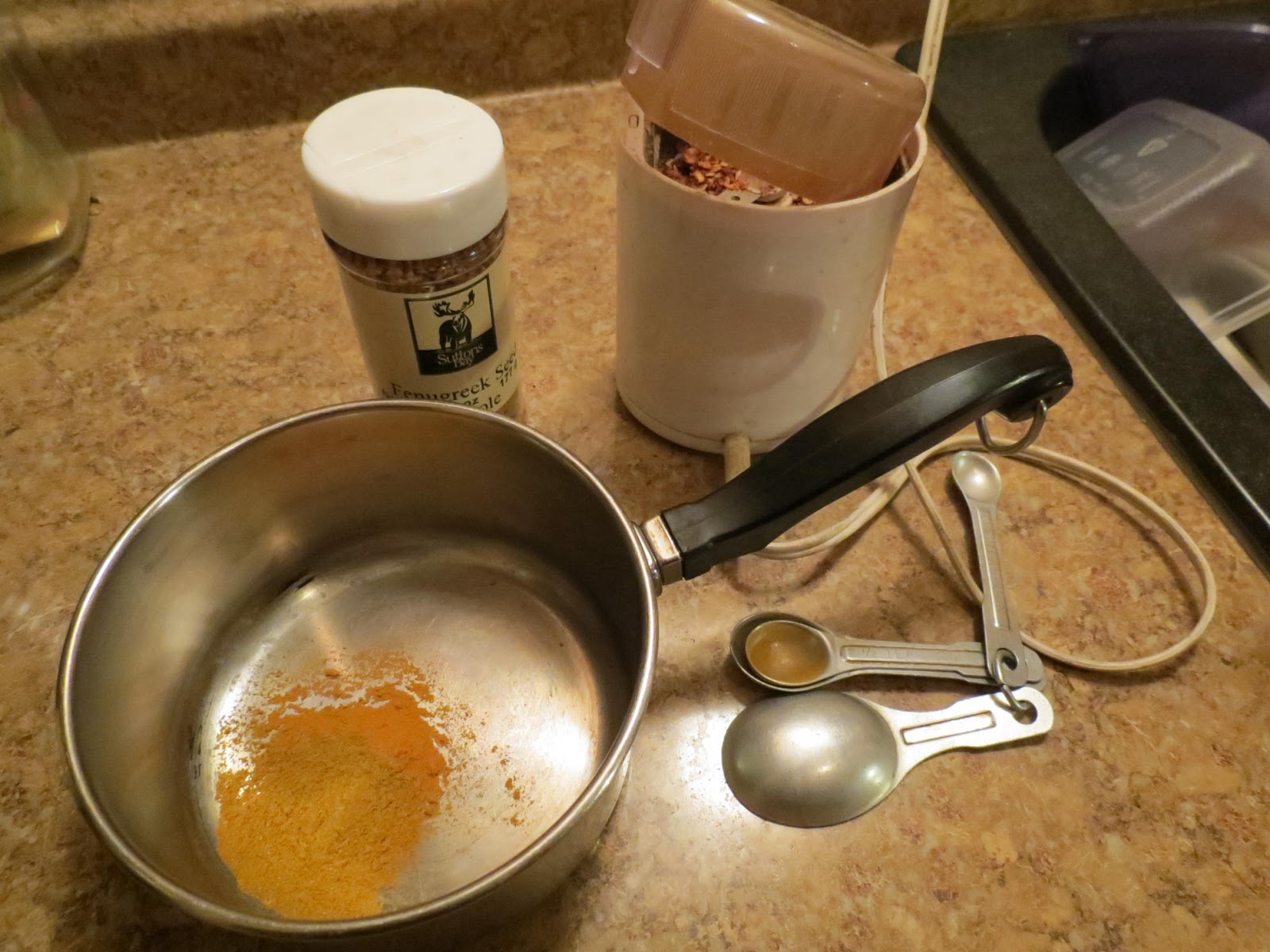
On a cozy day at home in winter my food thoughts yearn toward the foods of Africa. Quite honestly, though? I’d prepared well in advance for today’s kitchen adventure. For one thing, I had to make a trip to the specialty spice shop in Suttons Bay for fenugreek seed, and then it took several visits to the grocery store before Tom’s Market had green beans nice enough to satisfy me.


Here is the inspiring cookbook: The Africa News Cookbook: African Cooking for Western Kitchens, published by Penguin in 1985. The recipe that caught my eye over a week ago is called green bean atjar, or green bean pickles, but these are not at all like pickles my mother and grandmother made. No vinegar. They are, rather, spiced green beans, packed in oil and refrigerated before serving. According to the book, they will last up to a month in the refrigerator without processing, and so I imagine my beans as one dish in an African dinner sometime in the near future.

Two notes from my kitchen: 
(1) You might think I would want to make this dish in summer with fresh beans from garden or farm market. But why sacrifice the freshness of summer vegetables to oil and spices? No, to my mind this is a perfect winter dish. 
(2) The recipe does not specify what kind of oil to use. I decided on peanut oil, because it is used all over Africa and, also, the oil in this recipe is brought to a boil – not a happy fate for olive oil, I’m sure you’ll agree.

Here is an odd kitchen tool. I have no idea what it is called or where this one came from, but I use it all the time. It is so much easier than a pot lid when water is to be drained off vegetables and quite handy on occasions when a big colander would be overkill.


Sometimes, of necessity, kitchen activities expand beyond the confines of the tiny kitchen. This is another reason for making certain dishes ahead and not trying to do everything on the evening a dinner is to be served. The dining table, tablecloth whisked away, becomes a staging area, especially important as Sunday is bread day, too.


The proof of my South African spiced green beans will be in the eating, a story for some future post. Meanwhile, “Bundle up, campers! It’s cold out there!” Now who recognizes that movie quote?